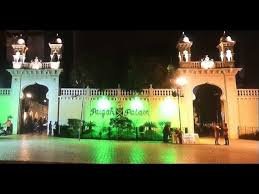
The Paigah Ameers (nobility) were famous for their beautiful palaces and Sir Vicar’s passion in this matter was perhaps unequalled, the prime example of that being the Falaknuma Palace which is synonymous with Hyderabad’s royal past. Sir Vicar was married to Princess Jahandarunnisa Begum, daughter of the fifth Nizam, Afzal Ud Dowlah. Every Hyderabadi is well acquainted with the story of how the sixth Nizam of the Asaf Jahi dynasty, Mir Mehboob Ali Khan, fell in love with the Falaknuma Palace at first sight and how it was promptly gifted to him by Sir Vicar. After this famous incident, Sir Vicar undertook the task of building Aiwan-e-Vicar, on a site used by his father Rashidudeen Khan (Vicar-Ul-Umra I) as a stop and a resting place when visiting the British Resident in Bolarum from his city palace.The Aiwan-e-Vicar was a complex of palaces which had in it the ‘Mardana’ palace, the residence of Sir Vicar, now home to the US Consulate and the ‘Zenana’ palace, the residence of Princess Jahandarunnisa Begum, also known as Lady Vicar. Later, the portion covering the present Paigah Palace became the residence of her grandson, Nawab Nazeer Nawaz Jung, the son-in-law of the sixth Nizam, Nawab Mir Mehboob Ali Khan, by virtue of his marriage to the Nizam’s daughter, Princess Dawoodunnisa Begum. This was in keeping with her brother the seventh Nizam's orders. The portion of the Zenana palace, which today is known as the Paigah Palace, still has one of Sir Vicar’s descendants living in it. The Paigah Palace is a large two-storied neo-classical building with a portico, semi-circular Indian arches, Corinthian columns, projected and pediment windows and deep arcaded verandas on all the four sides. A beautiful palace in sync with its function of being a Zenana palace, it has wide verandas facing inwards overlooking a courtyard with lawn. The Paigah Palace also has a separate electronic surveillance control room to monitor all activities, as also pantry area.



Paigah Palace
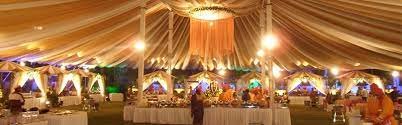
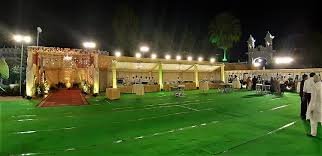
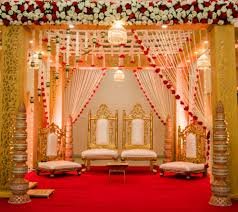
Wedding / Banquet Halls